
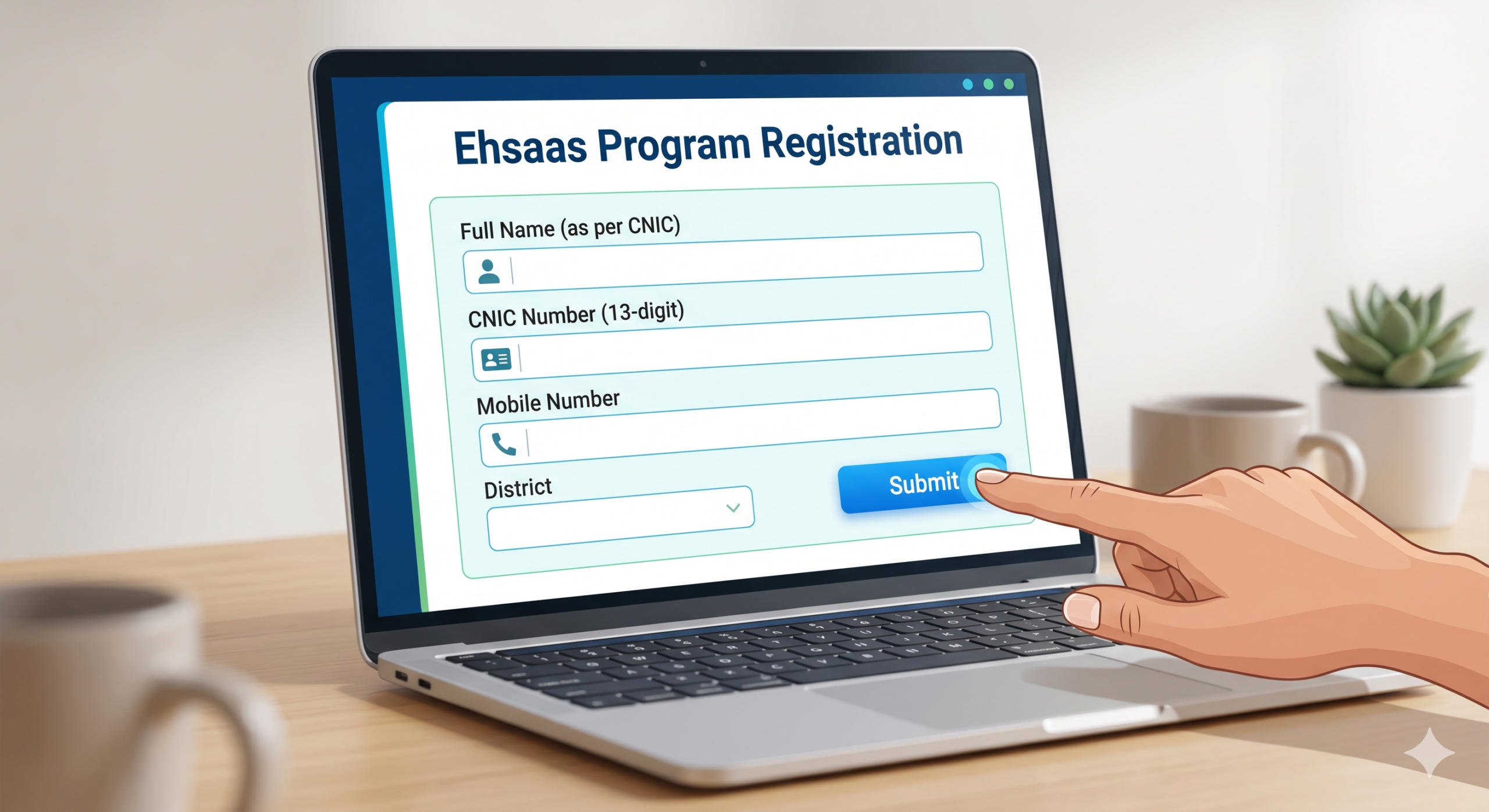
The Ehsaas Program is one of the most important social welfare initiatives introduced to support low-income families in Pakistan. Many households struggle to manage daily expenses because of unemployment, inflation, and limited financial resources. For such families, assistance programs provide temporary relief and help them meet basic needs like food, medicine, education, and utility bills.
Over the years, thousands of people have searched for information about Ehsaas Program registration, especially online registration methods. Many applicants want to know whether they can apply from home, what documents are required, and how the verification process works.
In the past, registration procedures were more difficult because people had to visit offices repeatedly. Today, digital systems and verification services have made the process easier for many applicants. However, confusion still exists because fake information spreads quickly on social media platforms.
This guide explains the complete process of registering for the Ehsaas Program online, including eligibility requirements, verification methods, required documents, common mistakes, and important safety tips.
What Is The Ehsaas Program
The Ehsaas Program is a welfare initiative designed to support financially struggling families. The purpose of the program is to provide assistance to deserving households facing economic hardship.
The program mainly focuses on:
- Low-income families
- Widows
- Unemployed individuals
- Deserving women
- Families affected by inflation
Through financial assistance and support systems, the program aims to improve living conditions for vulnerable households.
Why The Ehsaas Program Is Important
Many families across Pakistan face serious financial challenges. Rising prices of food, electricity, fuel, and medicines have increased pressure on low-income households.
The Ehsaas Program helps families:
- Manage basic household expenses
- Purchase groceries
- Support children’s education
- Handle medical costs
- Reduce financial stress
For many beneficiaries, this support becomes an important source of stability during difficult times.
Can You Register Online
Many people ask whether online registration is available for the Ehsaas Program. In most cases, applicants can begin the verification or eligibility checking process online. However, some applicants may still need to visit registration centers for surveys or biometric confirmation.
Online systems are mainly used for:
- Checking eligibility
- Verifying CNIC status
- Viewing registration updates
- Receiving confirmation messages
In certain situations, physical verification may still be necessary.
Who Can Apply For The Ehsaas Program
Eligibility depends on official household records and financial conditions.
Families may qualify if:
- Household income is low
- Applicant has a valid CNIC
- Family is financially deserving
- Applicant is not receiving high government benefits
- Survey records match official databases
Women are often prioritized during financial assistance programs.
Documents Required For Registration
Applicants should prepare important documents before beginning the registration process.
Original CNIC
A valid Computerized National Identity Card is required for verification.
Mobile Number
Applicants should use an active mobile number linked to their records.
Family Information
Household details may be needed during verification.
Utility Bill
In some cases, additional proof of residence may be requested.
Keeping documents ready helps avoid delays during registration.
Step-By-Step Online Registration Process
The online registration process is designed to be simple and user-friendly.
Step 1: Open The Official Portal
Use your mobile phone or computer browser to open the official registration or verification portal.
Always ensure you are using the correct website because fake websites often attempt to collect personal information.
Step 2: Enter CNIC Number
Type your 13-digit CNIC number carefully without spaces or dashes.
Incorrect information may prevent verification.
Step 3: Provide Required Information
Applicants may need to enter:
- Mobile number
- Family details
- Verification information
Step 4: Submit Application
After entering all details correctly, submit the application form.
The system may display confirmation or verification instructions.
What Happens After Registration
After submission, the system reviews applicant information through official records and verification databases.
Applicants may receive responses such as:
- Eligible
- Under verification
- Survey required
- Not eligible
Verification times can vary depending on record processing.
Importance Of Dynamic Survey
Many applicants are required to complete a dynamic survey.
The survey helps authorities verify:
- Family size
- Income status
- Household conditions
- Employment information
Families who fail to complete surveys may face delays or rejection.
How To Complete Dynamic Survey
If a survey is required, applicants may need to visit registration centers.
Step 1
Visit the nearest survey center.
Step 2
Provide family information honestly.
Step 3
Submit required documents.
Step 4
Complete biometric verification if requested.
Accurate information is very important during this process.
What Is Biometric Verification
Biometric verification confirms applicant identity through fingerprints.
This system helps:
- Prevent fraud
- Improve transparency
- Ensure payments reach deserving families
Fingerprint verification is commonly required during payment collection as well.
Common Problems During Registration
Many applicants experience issues because of incomplete records or incorrect information.
1. Incorrect CNIC Number
Typing errors are very common during online registration.
2. Expired CNIC
Expired identity cards may block verification.
3. Incomplete Survey
Pending surveys may stop approval.
4. Network Problems
Weak internet connections may interrupt online submissions.
5. Incorrect Household Information
False or outdated records can create verification issues.
Tips For Successful Registration
Applicants can improve their chances of smooth approval by following important guidelines.
Use Accurate Information
Always provide correct household details.
Keep CNIC Updated
Expired identity cards should be renewed immediately.
Complete Surveys On Time
Delays in surveys may affect eligibility.
Use Official Systems Only
Avoid fake websites and unofficial agents.
How To Check Registration Status
Applicants can check status through:
- Online portal
- SMS verification system
- Official registration centers
Regular status checks help applicants stay informed about verification progress.
SMS Verification Method
People without internet access can use the SMS service.
Steps:
- Open messaging app
- Type CNIC number
- Send to 8171
- Wait for response
The system will reply with eligibility or verification details.
Safety Tips For Applicants
Scammers often target beneficiaries by spreading false information.
Never Share Personal Information Publicly
Avoid posting CNIC details on social media.
Ignore Fake Calls
Fraudsters may pretend to be officials asking for money.
Do Not Pay Extra Fees
Official registration services are free.
Verify Information Through Official Sources
Always confirm updates through trusted channels.
Why Some Applications Get Rejected
Applications may be rejected because:
- Household income exceeds criteria
- Information does not match records
- Survey is incomplete
- CNIC issues exist
- Verification fails
Applicants should correct errors before reapplying.
Importance Of Digital Welfare Systems
Digital registration systems have improved transparency and efficiency in welfare programs.
Benefits include:
- Faster verification
- Easier access
- Reduced corruption
- Better record management
- Improved communication
Online systems also reduce unnecessary office visits for beneficiaries.
Challenges Faced By Rural Applicants
People living in villages often face:
- Weak internet access
- Long travel distances
- Limited awareness
- Transportation expenses
The SMS system has helped many rural families access information more easily.
Role Of Women In Assistance Programs
Women are central to many welfare programs because financial support is often distributed directly to female beneficiaries.
This approach helps:
- Improve household spending
- Support children’s education
- Strengthen family welfare
- Increase financial stability
Many women use assistance payments for essential household needs.