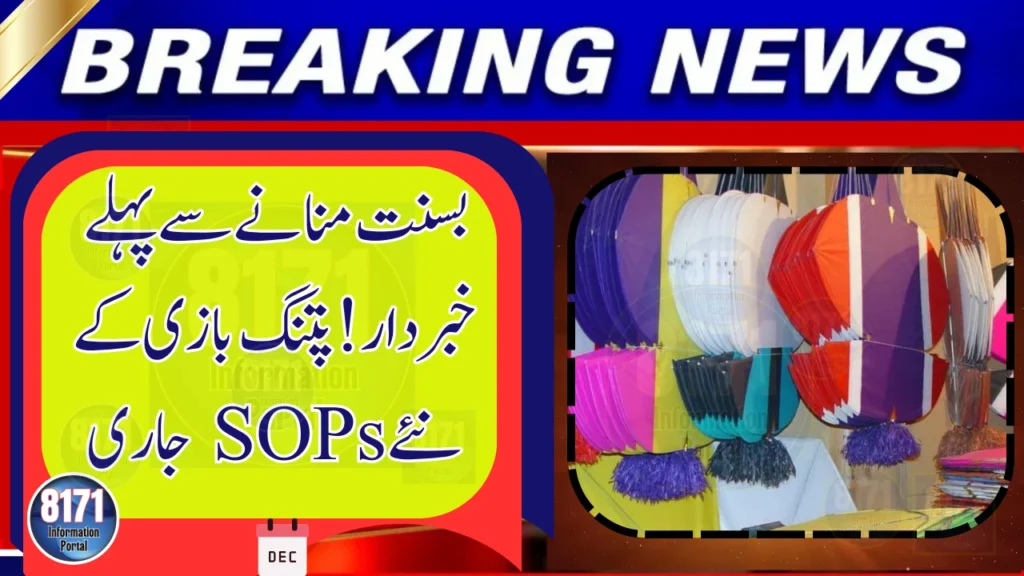
The Punjab government has officially issued a comprehensive set of Standard Operating Procedures (SOPs) for the Lahore Basant Festival, aiming to regulate kite flying and prevent injuries, accidents, and fatalities associated with the event.
The SOPs clearly define which kites and strings (dor) are allowed, while strictly banning all hazardous materials that have previously caused serious harm during Basant celebrations.

📏 Approved Kite Sizes and Types
According to the official notification, only specific kite dimensions are permitted:
- “Patang” kite
- Maximum width: 35 inches
- Maximum length: 30 inches (4.5 githi)
- “Gudda” kite
- Maximum width: 40 inches
- Maximum length: 34 inches (1.5 tawa)
Any kite exceeding these measurements will be declared illegal, and enforcement action will follow.
🧵 Strict Rules for Kite String (Dor)
The SOPs introduce tight controls on kite strings to ensure public safety:
- Only cotton dor is allowed
- Maximum 9 strands (tars)
- Minimum 28 counts
- Dor may be coated with maanjha, but:
- Minimum mesh size of 350 is mandatory
- Must be wound as a “pinna”
- Each pinna must carry a specific QR code for traceability
This QR-based system is designed to identify legal dor and prevent black-market sales.
🚫 Banned Materials and Equipment
The SOPs strictly prohibit:
- Charkhi (spool-based) dor
- Metallic wire
- Glass-coated or chemical-coated strings
The use, sale, manufacture, transport, or storage of banned dor will result in strict legal action, including fines, confiscation, and possible criminal charges.
⚠️ Enforcement and Public Warning
To avoid confusion, the SOP document includes illustrations clearly showing approved vs banned equipment. Authorities have urged citizens to follow the rules in letter and spirit, warning that violations may lead to:
- Heavy fines
- Immediate confiscation of kites and dor
- Criminal proceedings under relevant laws
The government says these measures are essential to ensure that Basant remains a safe and joyful festival, not a cause of tragedy.