
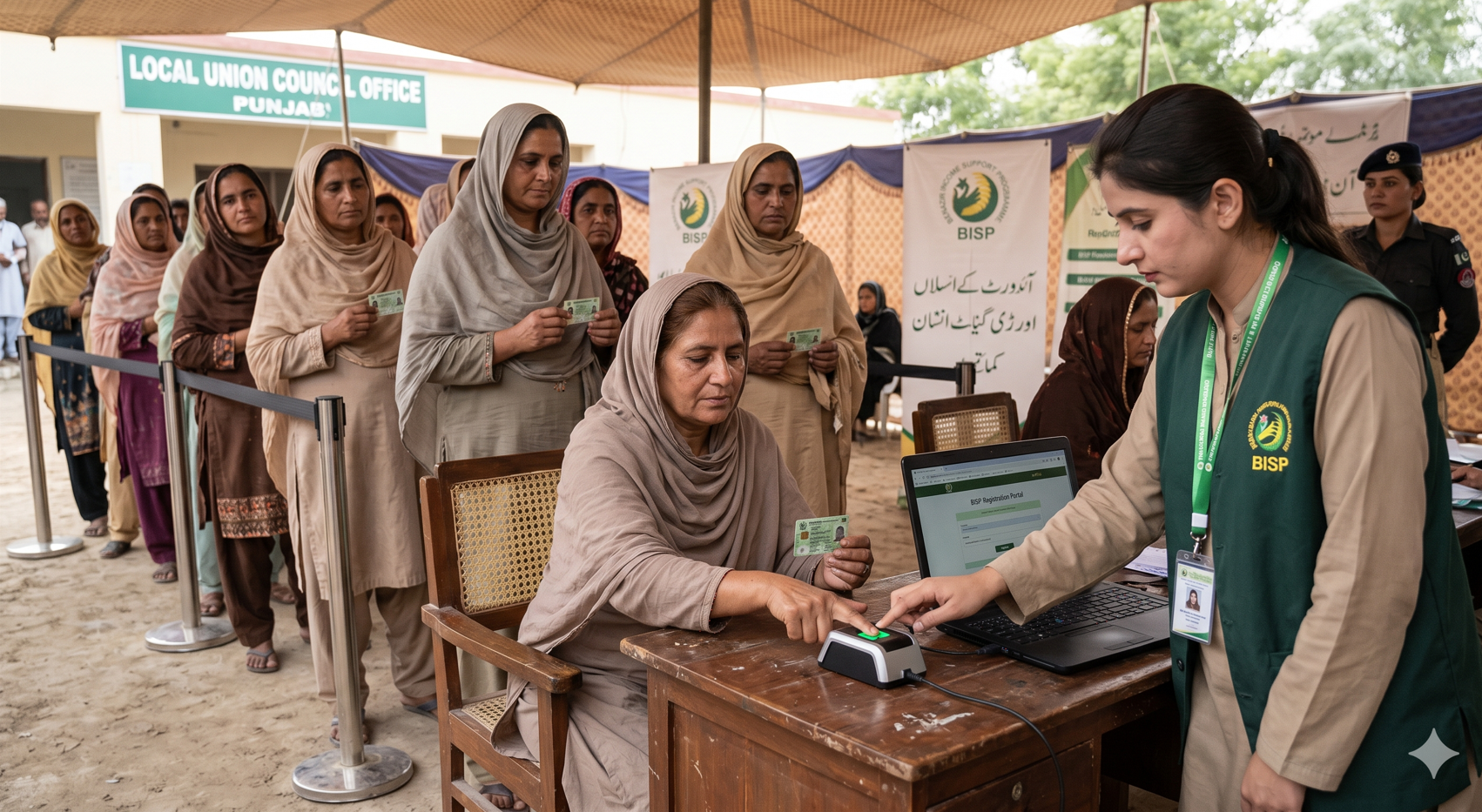
The Benazir Income Support Programme (BISP) plays a very important role in supporting low-income families across Pakistan. Among its most important features is that payments are usually given directly to women in the household. This approach is designed to improve financial stability at the family level and ensure that assistance is used for essential household needs such as food, education, health, and utilities.
In many areas of Pakistan, especially rural regions, women rely heavily on these payments. For some families, this financial support is the only steady source of income that helps manage monthly expenses. Because of this, understanding how women collect BISP payments, what steps are involved, and what precautions should be taken is very important.
Why BISP Payments Are Given to Women
One of the key policies of BISP is that financial assistance is usually registered in the name of women in the household. This is not random—it is a carefully planned approach based on social welfare studies.
There are several reasons for this:
1. Household Financial Stability
When women receive financial support directly, it is more likely to be used for basic household needs such as food, children’s education, and healthcare.
2. Empowerment of Women
Direct financial access helps women gain more control over household decisions, improving their confidence and social position.
3. Transparency in Distribution
Giving payments directly to women reduces the chances of misuse or fraud by middle agents.
4. Child Welfare Improvement
Studies show that when mothers control financial resources, children benefit more in terms of nutrition and education.
How Women Receive BISP Payments
The process of receiving BISP payments is designed to be simple but secure. It usually involves verification steps to ensure that the right person is receiving the money.
Step 1: Eligibility Confirmation
Before receiving any payment, the family must be declared eligible through the 8171 system or official BISP records. This eligibility is based on income level, household conditions, and survey data.
Step 2: Payment Notification
Once the payment is released, beneficiaries receive confirmation through:
- SMS from 8171
- 8171 web portal update
- Information from BISP centers
Step 3: Visit Payment Center
Women must visit the designated BISP payment center or campsite. These centers are set up in different areas to make access easier.
Step 4: CNIC Verification
At the center, the woman must provide her original CNIC card. The staff checks the details in the system before proceeding.
Step 5: Biometric Verification
Fingerprint verification is done using a biometric device. This step ensures that the payment is collected by the correct registered person.
Step 6: Cash Collection
After successful verification, the payment is handed over in cash. The beneficiary should count the amount before leaving the counter.
Documents Required for Payment Collection
Women collecting BISP payments should always carry the following documents:
- Original CNIC (mandatory)
- Registered mobile number (recommended)
- Any official SMS notification (if received)
Without these documents, payment processing may be delayed or temporarily stopped.
Common Issues Faced by Women During Payment Collection
Although the system is designed to be simple, some beneficiaries face problems during payment collection.
1. Biometric Failure
Sometimes fingerprints do not match due to age, dryness of skin, or technical issues.
2. CNIC Expiry
If the CNIC is expired, payment cannot be processed until renewal.
3. System Delay
High traffic at payment centers may cause delays in verification.
4. Survey Issues
Incomplete or outdated survey records may block payment release.
5. Wrong Information
Any mismatch in household data can create verification problems.
Safety Tips for Women Collecting Payments
Because BISP payments are very important for families, it is essential to stay careful during the collection process.
Avoid Middle Agents
Never give money to agents who claim they can “speed up” your payment. BISP services are free.
Keep CNIC Safe
Do not hand over your CNIC to unknown persons.
Use Official Centers Only
Always collect payments from authorized BISP campsites or banks.
Count Money Before Leaving
Always verify the amount before leaving the counter.
Do Not Share OTP or Personal Details
No official staff will ask for OTP codes or unnecessary personal details.
Importance of Women in BISP Program
Women are the central focus of the BISP system. This is because financial assistance is directly linked to improving family welfare.
When women manage household finances, several positive effects are seen:
- Better food distribution in the home
- Improved children’s education support
- Reduced financial stress in families
- Increased household stability
- Better use of government assistance
In many rural areas, this support system has helped families survive difficult economic conditions.
Role of Biometric Verification
Biometric verification is an important part of the payment system. It ensures that payments are secure and reach the correct person.
The fingerprint system helps:
- Prevent fraud
- Stop duplicate payments
- Confirm identity accurately
- Improve transparency
If biometric verification fails repeatedly, beneficiaries are advised to visit the registration center for re-verification.
Rural Challenges for Women
Women in rural areas often face additional difficulties such as:
- Long travel distances to payment centers
- Lack of transportation
- Crowded campsites
- Limited awareness about procedures
- Weather-related difficulties
Despite these challenges, the system continues to improve through better center distribution and SMS notifications.
Digital Improvements in Payment System
In recent years, BISP has introduced digital systems that make the process easier for beneficiaries.
These include:
- 8171 SMS service
- Online eligibility check portal
- Digital payment tracking
- Improved biometric systems
These improvements have reduced waiting time and improved transparency.
Why Some Payments Get Delayed
Delays can happen for several reasons, including:
- Verification updates in progress
- Survey completion required
- System maintenance
- CNIC renewal needed
- Data mismatch issues
In most cases, delays are temporary and resolved after verification.